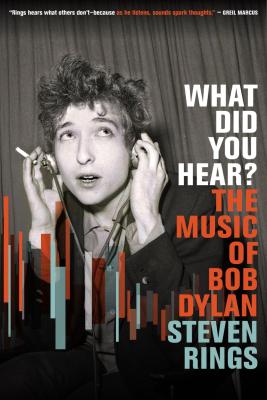
Steven Rings is a music theorist whose research focuses on popular music, voice, and transformational theory. Rings’s second book, What Did You Hear?: The Music of Bob Dylan (University of Chicago Press, 2025), explores the virtues of imperfection in Bob Dylan’s music making. Earlier publications on Dylan include “A Foreign Sound to Your Ear: Bob Dylan Performs ‘It’s Alright, Ma (I’m Only Bleeding),’ 1964–2009” (Music Theory Online, 2013), which won the 2014 Outstanding Publication Award from the Society for Music Theory’s Popular Music Interest Group.
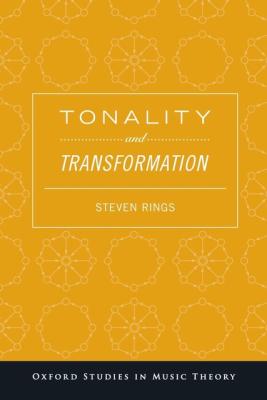
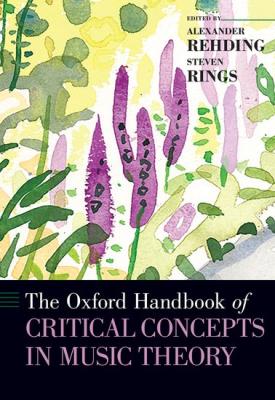
Rings’s first book, Tonality and Transformation (Oxford, 2011) develops a transformational model of tonal hearing, employing it in interpretive essays on music from Bach to Mahler. Rings also co-edited, with Alexander Rehding, The Oxford Handbook of Critical Concepts in Music Theory (Oxford, 2019), to which he contributed the chapter on “Tonic.” Both of these volumes received awards from the Society for Music Theory.
Beginning in 2017, Rings participated in a Mellon-funded collaboration with composer and percussionist Glenn Kotche—best known as the drummer for the band Wilco—under the auspices of the Gray Center for Arts and Inquiry. In recent years, Rings’s graduate and undergraduate courses have focused extensively on Black experimental musicians ranging from Albert Ayler to Matana Roberts. Earlier seminars explored the concept of melody; the relationship between song, track, and performance in diverse vernacular music traditions; the music of Bob Dylan; Lewinian transformational theory; and musical presence. Rings teaches tonal and post-tonal theory at the undergraduate and graduate levels, the history of theory, and a class on musical interpretation and criticism in the College Core (Music 10400).
Rings has served on the faculty of the Mannes Institute for Advanced Study in Music Theory and he is the series editor of Oxford Studies in Music Theory. He is Chair of the University of Chicago Society of Fellows and Resident Dean at Campus North Residential Commons. Rings also co-founded City Elementary, a school for neurodivergent K–8th graders in Hyde Park. Before becoming a music theorist, Rings was active as a classical guitarist, performing in the U.S. and in Portugal, where he was Professor of Guitar at the Conservatório Regional de Angra do Heroísmo. He has taught at Chicago since 2005.
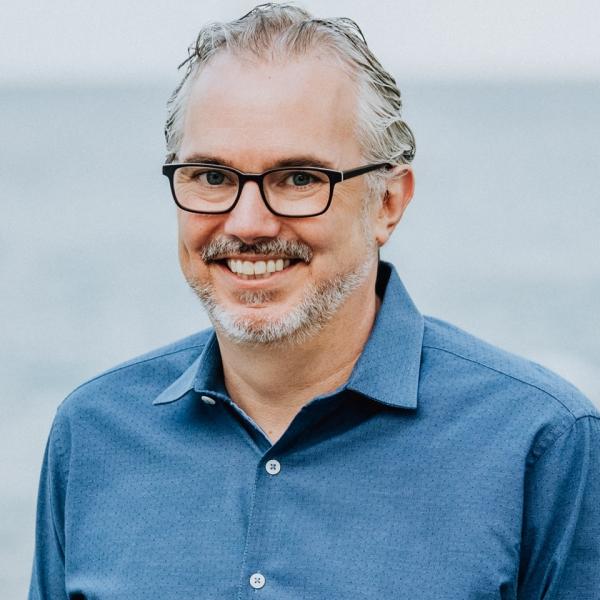
Photo by Charissa Johnson Photography: https://www.charissajohnsonphotography.com/.
Selected Publications
“Sign on the Window.” In The Poetry of Bob Dylan, ed. Michael Chasar, 85–90. New York: Bloombsury, 2025.
“Transformational Theory und Neo-Riemannian Theory.” In Handbuch Musikanalyse: Pluralität und Methode, ed. Ariane Jeßulat, Oliver Schwab-Felisch, Jan Philipp Sprick, and Christian Thorau, 199–215. Berlin: J. B. Metzler, 2025.
“Pleasure, Knowledge, and Politics Revisited.” In Musical Meaning and Interpretation: Perspectives, Reflections, Critique, ed. Jason Geary, Seth Monahan, and Michael Puri, 57–74. New York: Oxford University Press, 2025.
“Expanding the Commons.” Journal of Music Theory 68/1 (2025): 107–15.
“Jankélévitch, Fauré, and the Thirteenth Nocturne.” In Fauré Studies, ed. Stephen Rumph, 233–55. Cambridge: Cambridge University Press, 2021.
“Tonic.” In Oxford Handbook on Concepts in Music Theory, ed. Alexander Rehding and Steven Rings, 106–35. New York: Oxford University Press, 2019. Also available via Oxford Handbooks Online.
“Speech and/in Song.” In A Voice as Something More, ed. Martha Feldman and Judith Zeitlin, 37–53. Chicago: University of Chicago Press, 2019.
“Music’s Stubborn Enchantments (and Music Theory’s).” Music Theory Online 24.1 (2018).
“Analyzing the Popular Singing Voice: Sense and Surplus.” Journal of the American Musicological Society 68 (2015): 663–71.